

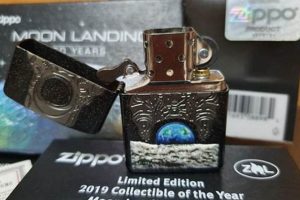

The annual designation of a specific Zippo lighter as the most sought-after collectible for a given year acknowledges a particular design, theme, or historical significance. For example, a lighter commemorating a historical... Read more »
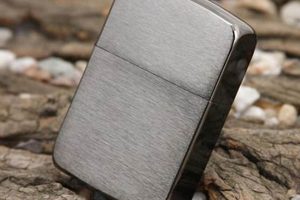
This specific lighter designates a reproduction of a Zippo lighter design originating from 1941, featuring a “Black Ice” finish. The 1941 models are known for their flatter top, less rounded corners, and... Read more »

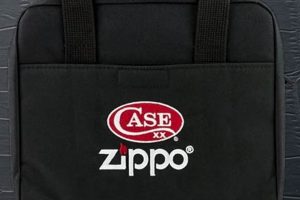
A protective receptacle designed specifically for Zippo lighters typically secures the lighter against scratches, impacts, and other potential damage. These range from simple pouches to rigid cases crafted from leather, metal, or... Read more »
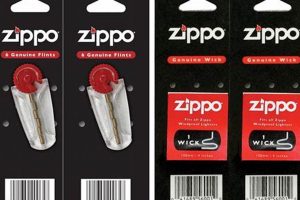
Small, hardened metal cylinders containing a ferrocerium alloy are essential for generating the spark that ignites the butane fuel in a specific brand of refillable lighter. These components are typically small, measuring... Read more »
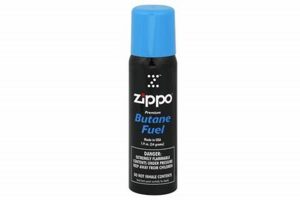
A consumer seeking lighter fuel locally often uses this type of search. It indicates a need for butane specifically designed for Zippo-brand inserts, implying the user owns a Zippo lighter and requires... Read more »
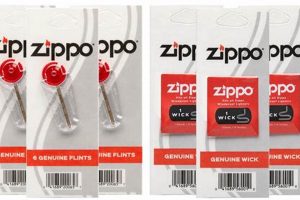
Zippo lighter wicks, while appearing similar, exhibit subtle variations that can influence lighter performance. These differences may include material composition, weaving patterns, and length. For example, some wicks are treated with a... Read more »
Premium lighter fluid is essential for optimal performance of refillable butane lighters. Retailers like Lowe’s often stock this specialized fluid, providing a convenient source for consumers. This availability ensures that owners of... Read more »
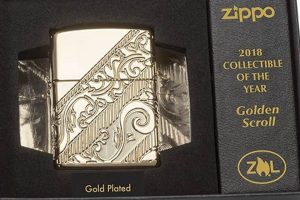
A Zippo lighter manufactured in 2018 and intended for collection can be identified by its date code stamped on the bottom of the case. These lighters may represent specific themes, events, or... Read more »
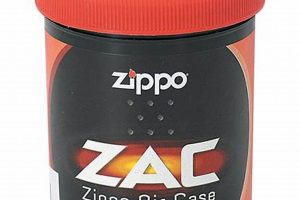
A protective, typically airtight container designed for a pocket lighter helps prevent fuel evaporation and safeguards against accidental ignition. These containers often provide a snug fit and may be constructed from materials... Read more »
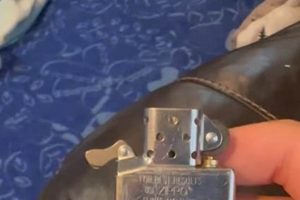
A Zippo lighter’s failure to ignite despite the user’s attempt to create a spark indicates a problem in the ignition system. This malfunction prevents the lighter from fulfilling its primary function. A... Read more »